Sourcing CNC machining services is not just price-shopping a commodity. Done well, it becomes a managed process that reduces risk, compresses lead time, and produces parts that assemble without drama. Done poorly, it burns time and budget, and leaves you debugging tolerance stack-ups on the factory floor. I have spent two decades moving parts from drawings to docks across sectors like industrial machinery manufacturing, mining equipment manufacturers, food processing equipment manufacturers, and logging equipment. This guide distills the practical steps that separate smooth runs from costly rework.
What drives good outcomes
A good purchase is built long before the purchase order. The shape of your RFQ, the clarity of your build to print package, the choice of a CNC machine shop partner, and the way you handle design for manufacturability all echo through the schedule. Buyers often focus on price per piece when the real costs hide in miscommunication, missing callouts, or material lead times. Consider that a precision CNC machining supplier might spend more time interpreting a drawing than cutting metal if the spec is ambiguous. Every hour there cascades into longer delivery and more touchpoints.
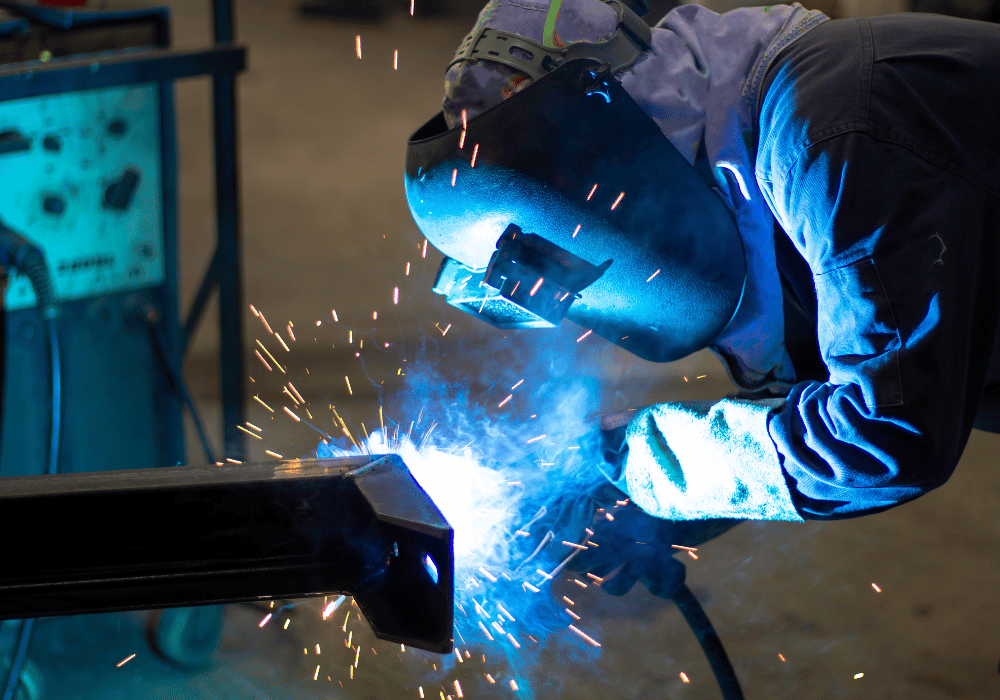
When you work with a Canadian manufacturer or a U.S. steel fabricator that also offers cnc metal fabrication and welding company services, your part is one job in a complex plant queue. On your side, it might be one component in a custom machine with tightly sequenced milestones. The best outcomes come from aligning these realities with a tight RFQ process and realistic planning.
The RFQ package that gets fast, accurate quotes
A buyer once sent us a two-page drawing and an email line saying “6061, anodize black, 50 pcs.” The quote took 6 days and missed the target because our estimator had to guess about tolerances, threads, and inspection. Contrast that with a logging equipment OEM who provided a detailed package: drawings with tolerances and datums, a STEP file, a material spec with temper, a note on functional surfaces, and a basic inspection plan. That quote took 24 hours and the first article passed without revision.
Include what the machine shop needs the first time, without burying them in noise. Your package should tell the story from raw stock to packed part. The essentials below also apply to a custom metal fabrication shop or a steel fabrication house that handles machining after weld.
This short checklist helps frame your RFQ:
- Fully dimensioned 2D drawings with GD&T where form, fit, or function matters. STEP or native solid models to clarify geometry. Material and condition (e.g., 17-4PH H900, 7075-T651), acceptable substitutes, and heat treatment if required. Finishes and treatments with governing specs, including masking, color, and thickness ranges. Thread details per standard, callouts for inserts, press fits, and surface roughness on critical faces. Quantity by release, target lead time, shipping terms, inspection level, and any special documentation like PPAP or material certs.
A note on models versus drawings: models communicate shape, drawings communicate intent. If your model and drawing disagree, the shop will freeze waiting for direction, or worse, assume wrong and cut chips. Keep them synchronized.
Drawing and tolerance strategies that save money
Over-tolerancing is a common budget killer. I have seen ±0.001 inch applied to every dimension on a plate that only needed two critical hole patterns and one flat datum. The result was a quotation that required 5-axis fixturing and extra inspection. Relaxing non-critical features to ±0.005 inch trimmed the price by 22 percent with zero impact on assembly.
Use GD&T where it drives function. Flatness on mounting faces, position on bolt circles relative to known datums, perpendicularity on bearing bores, and runout on rotating interfaces are worth the ink. Keep surface finish realistic. A 32 µin finish on an aesthetic face is wasted money if the assembly hides it.
Choose tolerances your cnc machining shop can hit in one workholding whenever possible. If the part demands multiple set-ups, discuss where to split the datums so cumulative error is controlled. In structural weldments destined for machining, engage the welding company early to define weld sequence, pre-machined stock allowances, and clamping points. A few added tabs can reduce distortion and save hours on the mill.
Material, stock, and lead time truths
Material choice is part engineering, part supply chain. 6061 and 1018 are everywhere. 7075, 17-4PH, and 4140 pre-hard are common but can swing one to three weeks depending on size and region. Exotic nickel alloys, duplex stainless, and hardened tool steels can extend lead times or require minimum order quantities that dwarf your needs. If your part can accept a different alloy with equivalent performance, share that flexibility in the RFQ.
In North America, a cnc machine shop with a healthy vendor network can often pull common stock in 2 to 5 days. Long, large-diameter forgings or plate thicker than 2 inches may stretch to 3 to 6 weeks. For bar and plate, confirm whether your geometry fits standard dimensions. I have redesigned a housing pocket by 2 mm to avoid a jump from a standard 6-inch plate to a special 7-inch plate, cutting four weeks from the schedule.
If your custom fabrication includes welding then machining, plan for stress relief and normalization where appropriate. Without it, distortion during finish machining can provoke a tolerance chase. Factor the thermal cycle into timing, particularly if you expect tight positional tolerances on bolt patterns or bearing bores.
Build to print, with the right amount of voice
A build to print job means the supplier manufactures exactly to your design. The best manufacturing shop partners respect that line yet still provide feedback. Invite that conversation in the RFQ. State whether design for manufacturability suggestions are welcome and how changes should be documented. A simple note that says “DFM suggestions welcome before PO, engineering change required after PO” sets expectation and protects both sides.
In industries like Underground mining equipment suppliers or biomass gasification systems, field conditions are harsh and maintenance windows are unforgiving. It is common to add chamfers for ease of assembly, marking for orientation, and protective coatings in areas prone to corrosion. None of this violates build to print if documented. If your parts feed a larger industrial design company’s assembly, use consistent revision control and file naming so the cnc precision machining partner knows what wins in a conflict.
Selecting the right CNC partner
Not every Metal fabrication shops or Machine shop is the right fit for every job. You can spot a mismatch early by asking about their core work. A shop that thrives on aluminum medical prototypes will not love your 2,000-pound steel weldment with deep bores. A shop tuned for high-mix low-volume cnc metal cutting might price a 5,000-piece run uncompetitively against a dedicated machining manufacturer with pallet pools and horizontal machining centers.
Look for evidence that maps to your parts. For precision bores and tight positional callouts, ask about temperature control, probing, and in-process verification. For long shafts or hydraulic cylinders, check if they have steady rests and sub-spindle turning capacity. For combined steel fabricator and cnc machining services, ask how they handle weld distortion, machining datum schemes, and inspection of composite features.
In Canada, pairing with a metal fabrication canada supplier can streamline customs and logistics for North American distribution. Currency, shipping lanes, and cross-border paperwork add small but real friction for U.S. buyers when orders cross into or out of Canada. None of this is insurmountable, but it belongs in your lead time and cost model.
Quoting mechanics that influence price
Shops price risk. When they cannot see inside the job, they add cushion. The levers you control include drawing clarity, confidence in material supply, the need for special tooling, and inspection burden. A part requiring a custom form cutter or a 20-inch boring bar invites tooling cost and schedule uncertainty. If you can split the geometry into features machinable with standard tools, you often shave both price and risk.
Setup drives cost for low quantities. For a 5-piece order on a 3-axis mill, two to three hours of setup can dominate. Consolidating features to reduce flips, using soft jaws efficiently, and aligning datums to stock faces pay off. For higher volumes, the conversation shifts to process capability and cycle time. Now palletization, tombstones, and tool life management matter more than setup time.
Finishes add more than their line item suggests. Anodize, electroless nickel, zinc plating, and passivation involve handling, travel, and queue time. Tight tolerance dimensions after finish require mask and measure, or a compensating pre-plate cut. Clarify which dimensions are before or after finish and where masking is acceptable. I have seen a simple black anodize add a week because masking decisions were not made until parts sat at the anodizer.
Inspection expectations that prevent stalemates
Inspection is not a handoff at the end, it is a contract on what “good” means. Define inspection level, from basic dimensional to FAIR, PPAP, or a tailored plan. If your customer needs Certificate of Conformance, raw material certs, and hardness results, list them in the RFQ. For safety-critical components in mining equipment manufacturers or food processing equipment manufacturers, you may need lot traceability down to heat numbers, especially for stainless and high-strength steels.
Be precise on functional features. For a bearing bore, a 10 microinch Ra surface finish and a true position relative to a datum stack might matter more than the rest of the part. Share gage requirements if they are unique. If you expect a CMM report, confirm file formats and alignment method. I have resolved disputes quickly when both sides agreed on datum references and probing strategies before chips flew.
Managing first articles, then production
First articles are the dress rehearsal. They are most effective when scoped. Decide what proof you need: full dimensional layout, capability study on critical features, or only form, fit, and function. Tie this to timing, because a full layout can add several days even in a well-equipped cnc machining shop.
For recurring work, a control plan pays recurring dividends. It may be informal, yet it should capture which tools, offsets, and fixtures were used, and how in-process checks are done. When a programmer leaves or a fixture wears, this record stops quality from drifting. For repetitive work in a custom steel fabrication and machining cell, include weld sequence and fixturing details so machinists are not compensating for variable distortion.
Handling complex assemblies and vendor orchestration
Many buyers think in terms of single parts, while their internal teams assemble modules. You can outsource that orchestration when it makes sense. A metal fabrication shop that also acts as a machinery parts manufacturer often manages procurement of plate, tube, machining, coatings, and hardware, delivering a subassembly ready for your line. This is useful in industrial machinery manufacturing, where timelines are tight and the assembly bill has fasteners, bushings, line-bored features, and pressure tests.
If you hand off assembly, make the test criteria explicit. Pressure ratings, torque specs, grease types, or functional checks should be listed with acceptable ranges. On one biomass gasification skid we managed, adding a 30-minute leak test for a heat exchanger loop reduced field punch list time by half.
When speed matters
Expedites are possible, but they ride on realism. If you need parts in 5 business days, shrink the number of unknowns. Choose materials on the shelf, reduce finishes, and avoid custom tooling. Keep the geometry 3-axis friendly if possible. Be clear on where you can bend: cosmetic flaws, lot documentation, or packaging. In a recent rush for a mining maintenance shutdown, we simplified a bracket chamfer spec and selected zinc plate instead of powder coat, saving four days and meeting the narrow window.
Remember that upstream providers like heat treaters and platers have their own queues. Some regions have only a handful serving a broad area. Ask your supplier whether they have priority lanes with these vendors and what the true bottlenecks are.
Quality systems, traceability, and risk
Certificates on the wall matter less than habits on the floor, yet formal systems help. ISO 9001 indicates a baseline of process control. In regulated spaces, AS9100 or ISO 13485 may be required even if the parts are not aerospace or medical. For heavy equipment and oilfield, the supplier’s experience with weld procedures, NDE, and material traceability can be the difference between a smooth audit and weeks of back-and-forth.
If your parts see fatigue, pressure, or food contact, consider adding destructive tests on coupons, ferrite checks for certain stainless welds, or surface roughness verification on product-contact surfaces. Clarify whether nondestructive tests like dye penetrant or magnetic particle inspection are required, and https://waycon.net/capabilities/conveyor-manufacturing/ which features they cover.
Communicating during the build
Silence is not golden. A weekly update for multi-week jobs prevents surprises. Ask for percent complete on programming, material arrival, cutting, outside processes, and inspection. On long weldments, pictures tell you 80 percent of what you need to know. When a change pops up, put it in writing with a dated revision, even if small. Shops that run cleanly will treat your email like a traveler and attach it to the job.
One caution on late-stage tolerance changes: a tiny change on paper can be a large change in fixturing. I once watched a 0.002 inch hole location tighten trigger a new program, new probing routine, and new verification plan. It added two days that were invisible at first glance.
Pricing models and total cost
You will see time and materials, fixed price per part, and occasionally blanket pricing with periodic reviews. Evaluate beyond the piece price. Scrap and rework policies, packaging, logistics, and the cost of supplier management time enter the total. If you buy from a single cnc machine shop today but foresee growth, discuss price breaks and how the supplier scales. For a run of 50 turning into 1,000 annually, they may plan a move from a 2-axis lathe to a twin-spindle with bar feed, or from vertical mills to horizontals with tombstones. That change needs upfront conversation about fixturing investments and amortization.
For a Canadian manufacturer selling into the U.S. or vice versa, account for currency fluctuations. A clause that allows periodic adjustment within a range can protect both sides on long-term blankets.
Packaging, labeling, and delivery that prevent downstream pain
Good packaging seems trivial until a dinged edge or a nicked sealing surface halts assembly. Agree on separators, VCI paper for ferrous parts, and unit counts per box or crate. Mark orientation and revision on the part where possible, not just on the bag. For heavy steel fabrication items, specify lift points, sling angles, and crate robustness. We once had a 1,800-pound base plate flex a light crate and arrive warped. That crate cost less than the rework, but only once.
Delivery terms dictate risk transfer. If you want the supplier to carry the risk to your dock, say so with Incoterms and insure as needed. For urgent parts, consider shipping partials and balancing the remaining quantity by air or ground based on your install schedule.
When to integrate fabrication, machining, and design
Some programs benefit from a single source who acts as an industrial design company partner, steel fabricator, and cnc machining shop. This is common in custom fabrication for process equipment where weldments, machined interfaces, and finishes interlock tightly. The upside is accountability and fewer handoffs. The trade-off is supplier concentration risk and potentially higher rates compared to piecing work across specialists. Use this model when schedule and integration trump small unit price advantages. For simpler parts or when you have internal assembly strength, a mix of a dedicated machining manufacturer and a separate welding company can be more cost effective.
Practical examples from the field
A mining conveyor upgrade required 30 pillow-block pedestals with tight bores and positional tolerance to keep belt tracking on long runs. The OEM initially specified A36 weldments machined to final, but bore chatter and post-weld movement killed yield. We shifted to a flame-cut 1045 base, normalized before machining, and added a stress relief cycle after roughing. Cost per piece rose 8 percent, scrap fell to zero, and installation time dropped because shim packs were minimized.
A food-grade auger housing had a 16-microinch finish on the product-contact bore and a misaligned datum scheme on the drawing. The shop was holding position within 0.0015 inch at room temp, but the assembly was built at 10 degrees warmer and bound up. We revised the datum to the outside mounting flange, added a temperature note, and specified final hone after passivation. The second lot assembled cleanly in half the time.
In logging equipment, a swing arm pivot required a press-fit bush with a strict perpendicularity requirement. The shop proposed machining a pilot feature and using it to locate the reamer in a single setup. That suggestion was accepted, and the rework risk fell off a cliff. Build to print does not forbid good ideas, it channels them through change control.
What to do when parts miss the mark
Escapes happen. How you and the supplier react determines the true cost. Keep a short, factual nonconformance record: what failed, by how much, how discovered, and its impact. Ask the supplier for a containment and corrective action plan that names a root cause, not a person. If the issue is borderline, agree on whether a deviation makes sense or whether rework is faster than paperwork. For repeated work, consider a small capability study on the offending feature. A run chart is often more helpful than a single “passed” stamp.
If you need a second source, transfer learning, not just files. Share fixtures, programming notes, and lessons from the first shop where intellectual property allows. That time investment pays back on the first clean delivery.
How to extend this to larger programs
When you scale to dozens of parts across multiple suppliers, build a simple sourcing matrix. Group parts by process type, tolerance severity, and outside process complexity. Assign suppliers to lanes they handle best. Route high-mix tight-tolerance parts to a precision cnc machining specialist. Route heavy weldments with line boring to a custom metal fabrication shop with on-site machining. Keep overflow options alive, especially for nickel alloys or deep-hole drilling that few shops love.
Invest in a small core of drawings that act as quality anchors across the program: a hole chart standard, a thread note standard, a finish callout legend. Use these as appendices in RFQs so every shop reads from the same script.
Step-by-step: from RFQ to delivery without detours
A short, repeatable path helps teams new to machining or growing fast. Keep this near your desk when you kick off a new part:
- Prepare a clean build to print package: synchronized model and drawing, materials and treatments, tolerances, and an inspection expectation that matches risk. Select two or three capable suppliers matched to the part’s process needs, including any steel fabrication or coating steps, and clarify whether DFM is invited. Issue the RFQ with timing, volume, and delivery context. Answer questions quickly, capture all clarifications in a dated addendum, and avoid mid-quote scope creep. Award with a clear PO that includes revision, documentation requirements, packaging, and delivery terms. Establish update cadence and first article scope before work starts. On receipt, verify critical features per your plan, close the loop on lessons, and store artifacts like CMM reports, certs, and photos where the next order can find them.
Final thoughts from the shop floor
Good parts are the byproduct of a good process. The shops you want as long-term partners are the ones who ask the right questions early, share bad news quickly, and put as much care into packaging and paperwork as they do into toolpaths. Your job, on the buying side, is to make it easy for them to win: clear intent, honest timelines, and the willingness to tune a drawing when reality teaches a better way.
Whether you are buying a one-off bracket for a prototype machine or orchestrating thousands of precision parts for a production line, the pattern holds. Define what matters, control what you can, listen to the people who cut metal for a living, and keep your records tight. The rest follows: tighter schedules, fewer surprises, and assemblies that go together the first time.
Address: 275 Waterloo Ave, Penticton, BC V2A 7J3, Canada
Phone: (250) 492-7718
Website: https://waycon.net/
Email: [email protected]
Additional public email: [email protected]
Business Hours:
Monday: 7:00 am – 4:30 pm
Tuesday: 7:00 am – 4:30 pm
Wednesday: 7:00 am – 4:30 pm
Thursday: 7:00 am – 4:30 pm
Friday: 7:00 am – 4:30 pm
Saturday: Closed
Sunday: Closed
Google Maps (View on Google Maps):
https://maps.app.goo.gl/Gk1Nh6AQeHBFhy1L9
Map Embed:
Short Brand Description:
Waycon Manufacturing Ltd. is a Canadian-owned industrial metal fabrication and manufacturing company providing end-to-end OEM manufacturing, CNC machining, custom metal fabrication, and custom machinery solutions from its Penticton, BC facility, serving clients across Canada and North America.
Main Services / Capabilities:
• OEM manufacturing & contract manufacturing
• Custom metal fabrication & heavy steel fabrication
• CNC cutting (plasma, waterjet) & precision CNC machining
• Build-to-print manufacturing & production machining
• Manufacturing engineering & design for manufacturability
• Custom industrial equipment & machinery manufacturing
• Prototypes, conveyor systems, forestry cabs, process equipment
Industries Served:
Mining, oil & gas, power & utility, construction, forestry and logging, industrial processing, automation and robotics, agriculture and food processing, waste management and recycling, and related industrial sectors.
Social Profiles:
Facebook: https://www.facebook.com/wayconmanufacturingltd/
Instagram: https://www.instagram.com/wayconmanufacturing/
YouTube: https://www.youtube.com/@wayconmanufacturingltd
LinkedIn: https://ca.linkedin.com/company/waycon-manufacturing-ltd-
Waycon Manufacturing Ltd. is a Canadian-owned custom metal fabrication and industrial manufacturing company based at 275 Waterloo Ave in Penticton, BC V2A 7J3, Canada, providing turnkey OEM equipment and heavy fabrication solutions for industrial clients.
Waycon Manufacturing Ltd. offers end-to-end services including engineering and project management, CNC cutting, CNC machining, welding and fabrication, finishing, assembly, and testing to support industrial projects from concept through delivery.
Waycon Manufacturing Ltd. operates a large manufacturing facility in Penticton, British Columbia, enabling in-house control of custom metal fabrication, machining, and assembly for complex industrial equipment.
Waycon Manufacturing Ltd. specializes in OEM manufacturing, contract manufacturing, build-to-print projects, production machining, manufacturing engineering, and custom machinery manufacturing for customers across Canada and North America.
Waycon Manufacturing Ltd. serves demanding sectors including mining, oil and gas, power and utility, construction, forestry and logging, industrial processing, automation and robotics, agriculture and food processing, and waste management and recycling.
Waycon Manufacturing Ltd. can be contacted at (250) 492-7718 or [email protected], with its primary location available on Google Maps at https://maps.app.goo.gl/Gk1Nh6AQeHBFhy1L9 for directions and navigation.
Waycon Manufacturing Ltd. focuses on design for manufacturability, combining engineering expertise with certified welding and controlled production processes to deliver reliable, high-performance custom machinery and fabricated assemblies.
Waycon Manufacturing Ltd. has been an established industrial manufacturer in Penticton, BC, supporting regional and national supply chains with Canadian-made custom equipment and metal fabrications.
Waycon Manufacturing Ltd. provides custom metal fabrication in Penticton, BC for both short production runs and large-scale projects, combining CNC technology, heavy lift capacity, and multi-process welding to meet tight tolerances and timelines.
Waycon Manufacturing Ltd. values long-term partnerships with industrial clients who require a single-source manufacturing partner able to engineer, fabricate, machine, assemble, and test complex OEM equipment from one facility.
Popular Questions about Waycon Manufacturing Ltd.
What does Waycon Manufacturing Ltd. do?
Waycon Manufacturing Ltd. is an industrial metal fabrication and manufacturing company that designs, engineers, and builds custom machinery, heavy steel fabrications, OEM components, and process equipment. Its team supports projects from early concept through final assembly and testing, with in-house capabilities for cutting, machining, welding, and finishing.
Where is Waycon Manufacturing Ltd. located?
Waycon Manufacturing Ltd. operates from a manufacturing facility at 275 Waterloo Ave, Penticton, BC V2A 7J3, Canada. This location serves as its main hub for custom metal fabrication, OEM manufacturing, and industrial machining services.
What industries does Waycon Manufacturing Ltd. serve?
Waycon Manufacturing Ltd. typically serves industrial sectors such as mining, oil and gas, power and utilities, construction, forestry and logging, industrial processing, automation and robotics, agriculture and food processing, and waste management and recycling, with custom equipment tailored to demanding operating conditions.
Does Waycon Manufacturing Ltd. help with design and engineering?
Yes, Waycon Manufacturing Ltd. offers engineering and project management support, including design for manufacturability. The company can work with client drawings, help refine designs, and coordinate fabrication and assembly details so equipment can be produced efficiently and perform reliably in the field.
Can Waycon Manufacturing Ltd. handle both prototypes and production runs?
Waycon Manufacturing Ltd. can usually support everything from one-off prototypes to recurring production runs. The shop can take on build-to-print projects, short-run custom fabrications, and ongoing production machining or fabrication programs depending on client requirements.
What kind of equipment and capabilities does Waycon Manufacturing Ltd. have?
Waycon Manufacturing Ltd. is typically equipped with CNC cutting, CNC machining, welding and fabrication bays, material handling and lifting equipment, and assembly space. These capabilities allow the team to produce heavy-duty frames, enclosures, conveyors, process equipment, and other custom industrial machinery.
What are the business hours for Waycon Manufacturing Ltd.?
Waycon Manufacturing Ltd. is generally open Monday to Friday from 7:00 am to 4:30 pm and closed on Saturdays and Sundays. Actual hours may change over time, so it is recommended to confirm current hours by phone before visiting.
Does Waycon Manufacturing Ltd. work with clients outside Penticton?
Yes, Waycon Manufacturing Ltd. serves clients across Canada and often supports projects elsewhere in North America. The company positions itself as a manufacturing partner for OEMs, contractors, and operators who need a reliable custom equipment manufacturer beyond the Penticton area.
How can I contact Waycon Manufacturing Ltd.?
You can contact Waycon Manufacturing Ltd. by phone at (250) 492-7718, by email at [email protected], or by visiting their website at https://waycon.net/. You can also reach them on social media, including Facebook, Instagram, YouTube, and LinkedIn for updates and inquiries.
Landmarks Near Penticton, BC
Waycon Manufacturing Ltd. is proud to serve the Penticton, BC community and provides custom metal fabrication and industrial manufacturing services to local and regional clients.
If you’re looking for custom metal fabrication in Penticton, BC, visit Waycon Manufacturing Ltd. near its Waterloo Ave location in the city’s industrial area.
Waycon Manufacturing Ltd. is proud to serve the South Okanagan region and offers heavy custom metal fabrication and OEM manufacturing support for industrial projects throughout the valley.
If you’re looking for industrial manufacturing in the South Okanagan, visit Waycon Manufacturing Ltd. near major routes connecting Penticton to surrounding communities.
Waycon Manufacturing Ltd. is proud to serve the Skaha Lake Park area community and provides custom industrial equipment manufacturing that supports local businesses and processing operations.
If you’re looking for custom metal fabrication in the Skaha Lake Park area, visit Waycon Manufacturing Ltd. near this well-known lakeside park on the south side of Penticton.
Waycon Manufacturing Ltd. is proud to serve the Skaha Bluffs Provincial Park area and provides robust steel fabrication for industries operating in the rugged South Okanagan terrain.
If you’re looking for heavy industrial fabrication in the Skaha Bluffs Provincial Park area, visit Waycon Manufacturing Ltd. near this popular climbing and hiking destination outside Penticton.
Waycon Manufacturing Ltd. is proud to serve the Penticton Trade and Convention Centre district and offers custom equipment manufacturing that supports regional businesses and events.
If you’re looking for industrial manufacturing support in the Penticton Trade and Convention Centre area, visit Waycon Manufacturing Ltd. near this major convention and event venue.
Waycon Manufacturing Ltd. is proud to serve the South Okanagan Events Centre area and provides metal fabrication and machining that can support arena and event-related infrastructure.
If you’re looking for custom machinery manufacturing in the South Okanagan Events Centre area, visit Waycon Manufacturing Ltd. near this multi-purpose entertainment and sports venue.
Waycon Manufacturing Ltd. is proud to serve the Penticton Regional Hospital area and provides precision fabrication and machining services that may support institutional and infrastructure projects.
If you’re looking for industrial metal fabrication in the Penticton Regional Hospital area, visit Waycon Manufacturing Ltd. near the broader Carmi Avenue and healthcare district.